Mediterranean garden with Provencal vegetation
- Dimensions: 4000 m²
- Plants: Agave, yucca rostrata, Chinese palm, phormium, kniphofia, agapanthus
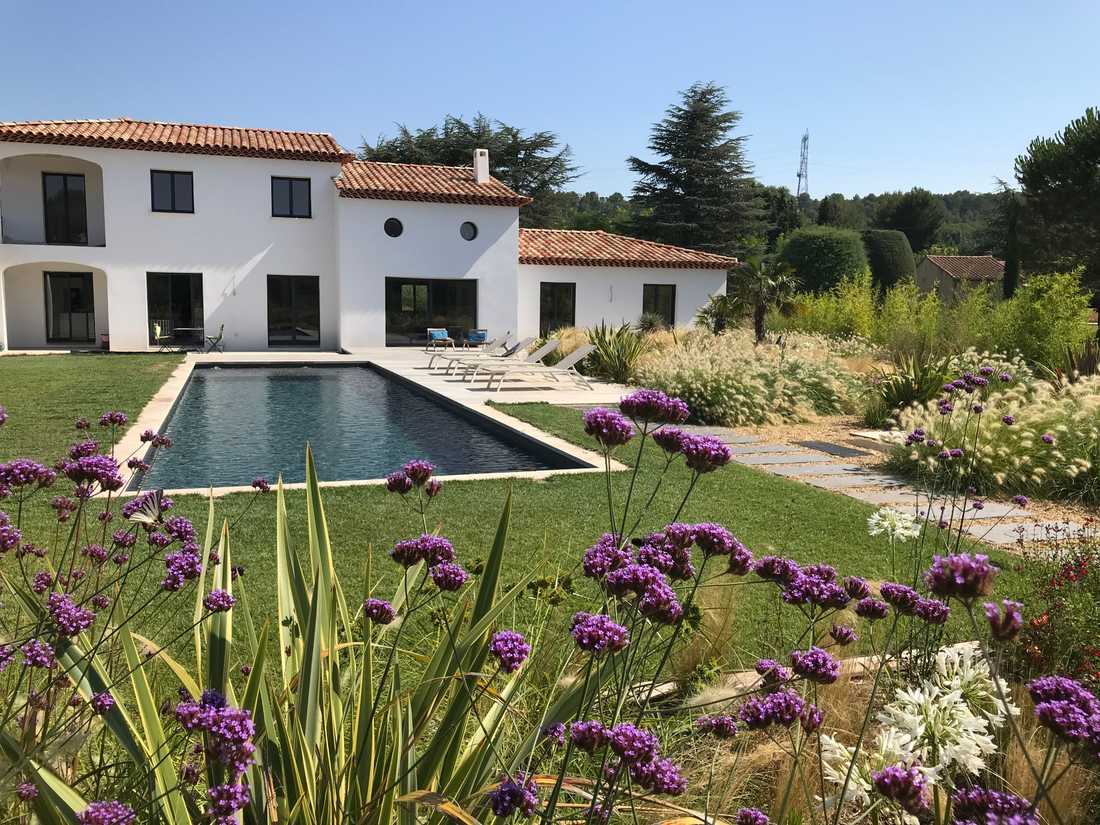
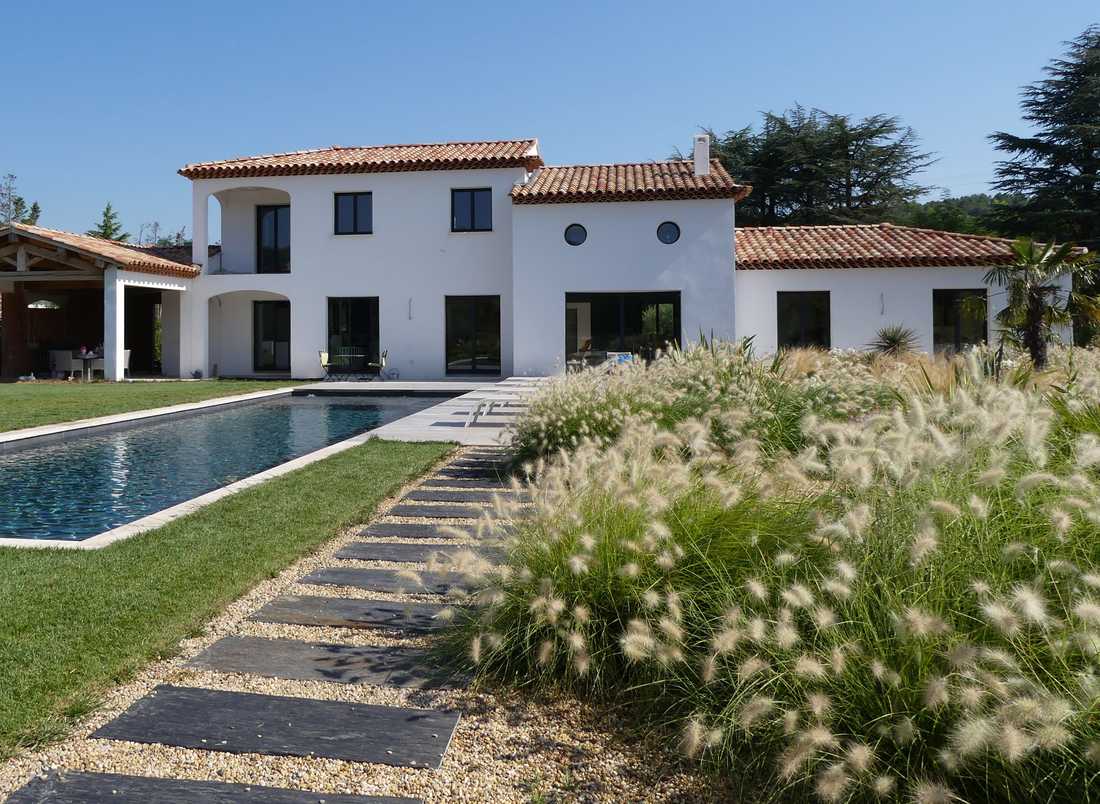

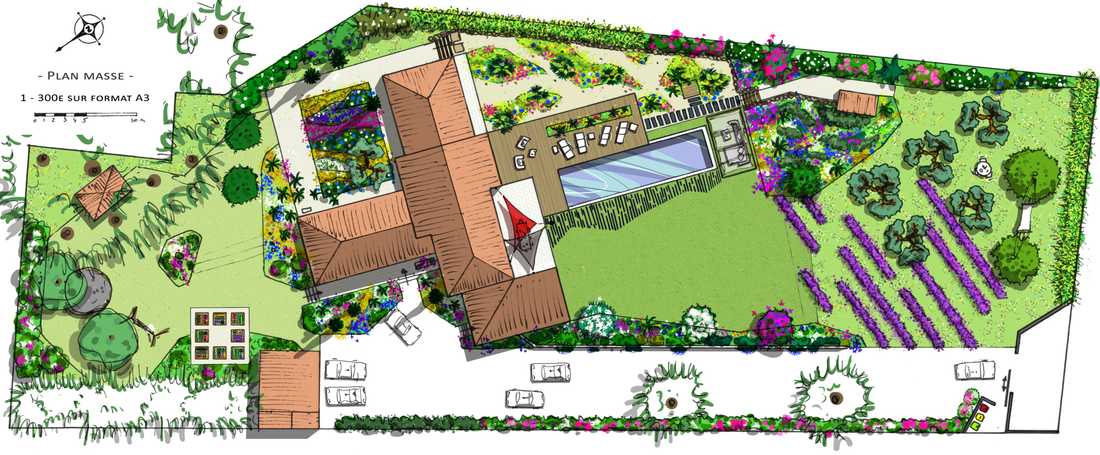
This 4,000 m² Mediterranean garden incorporates several types of spaces and atmospheres. The staging of the house entrance draws on typically Provençal landscaping elements. These include a mini lavender field, a mini olive grove and a beautiful fig tree.
The pool and terrace
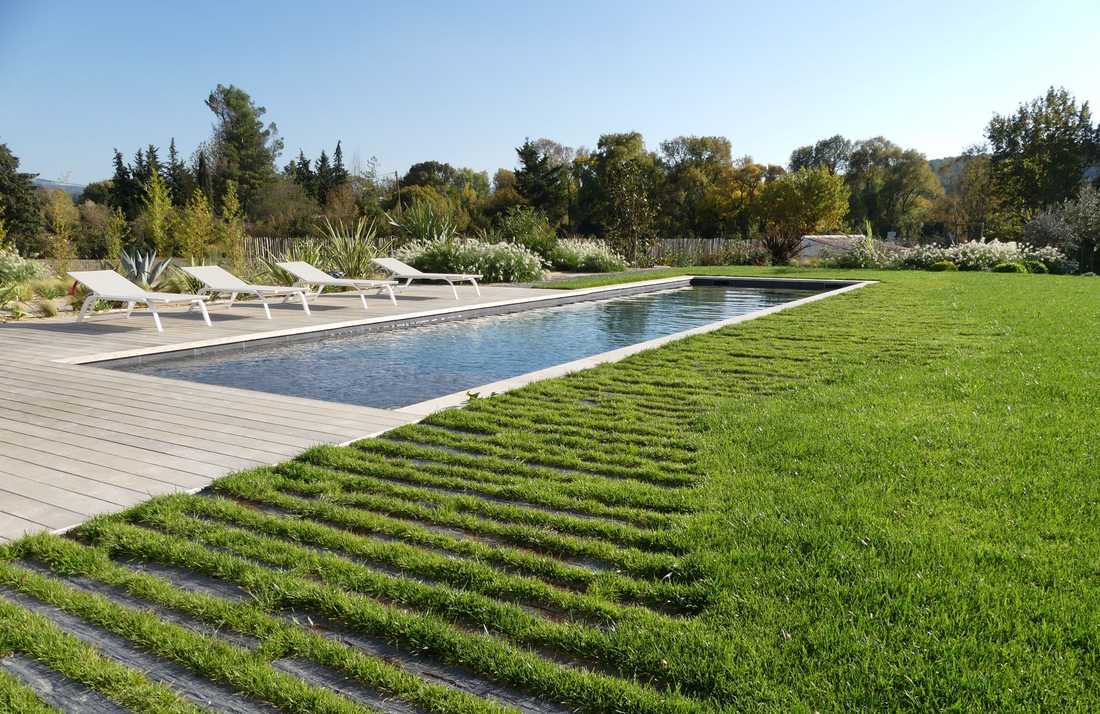
An important objective of the project was to bring the existing pool and terrace area to life. The landscape designer devised an original path running alongside the pool, made up of Japanese stepping stones in slate stakes of varying lengths, creating a particularly graphic transition with the vast lawn that serves as a play area for the whole family.
Mediterranean climate plants
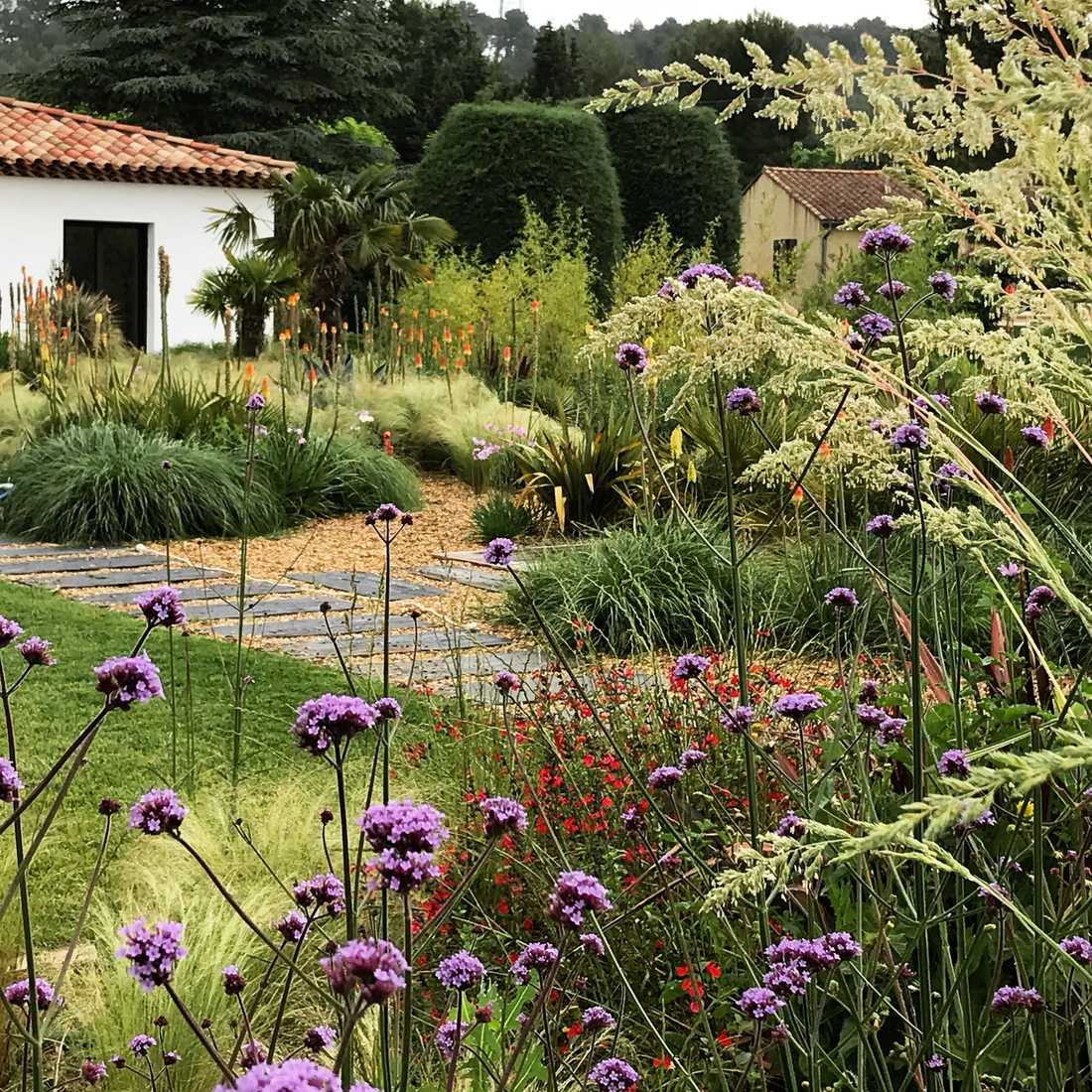
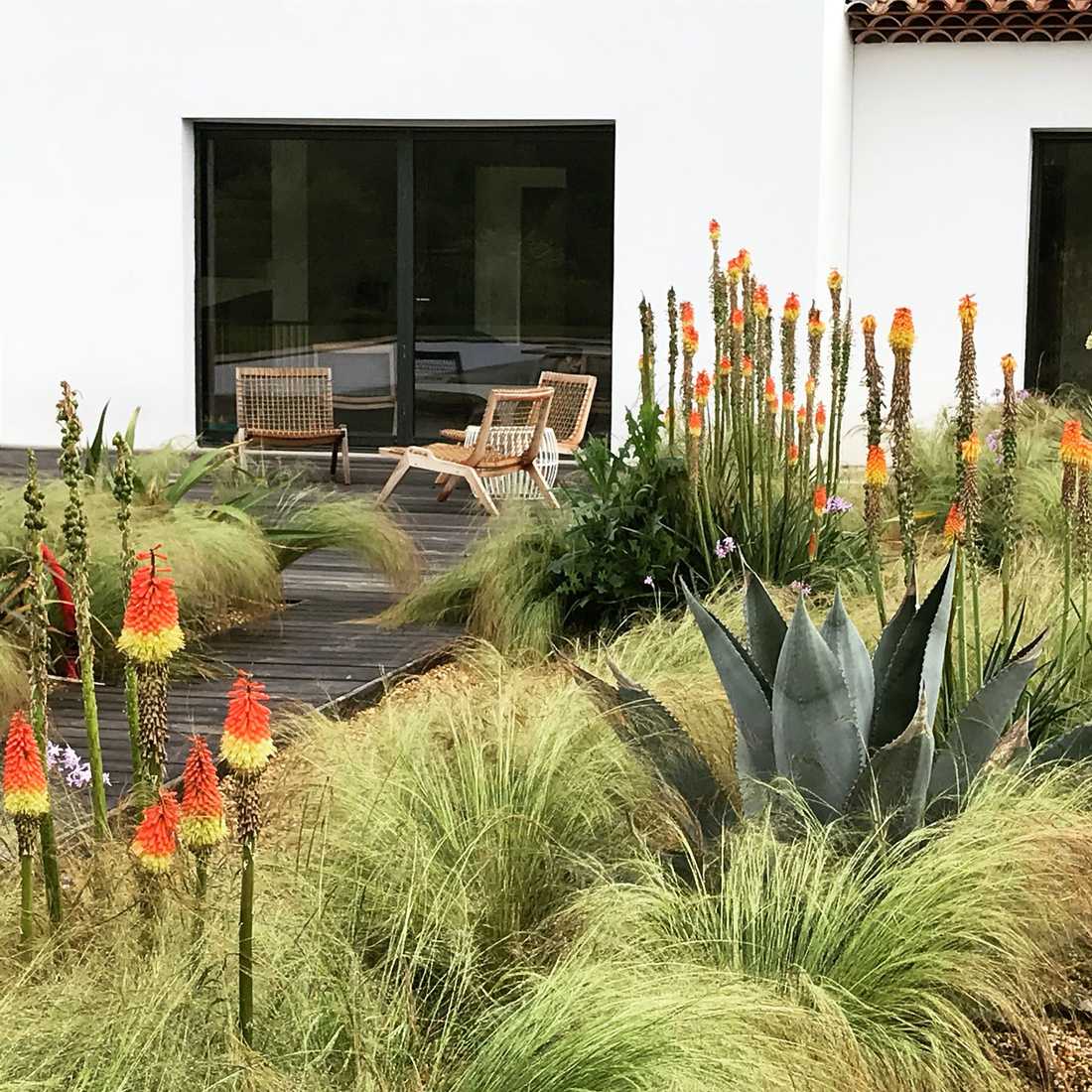
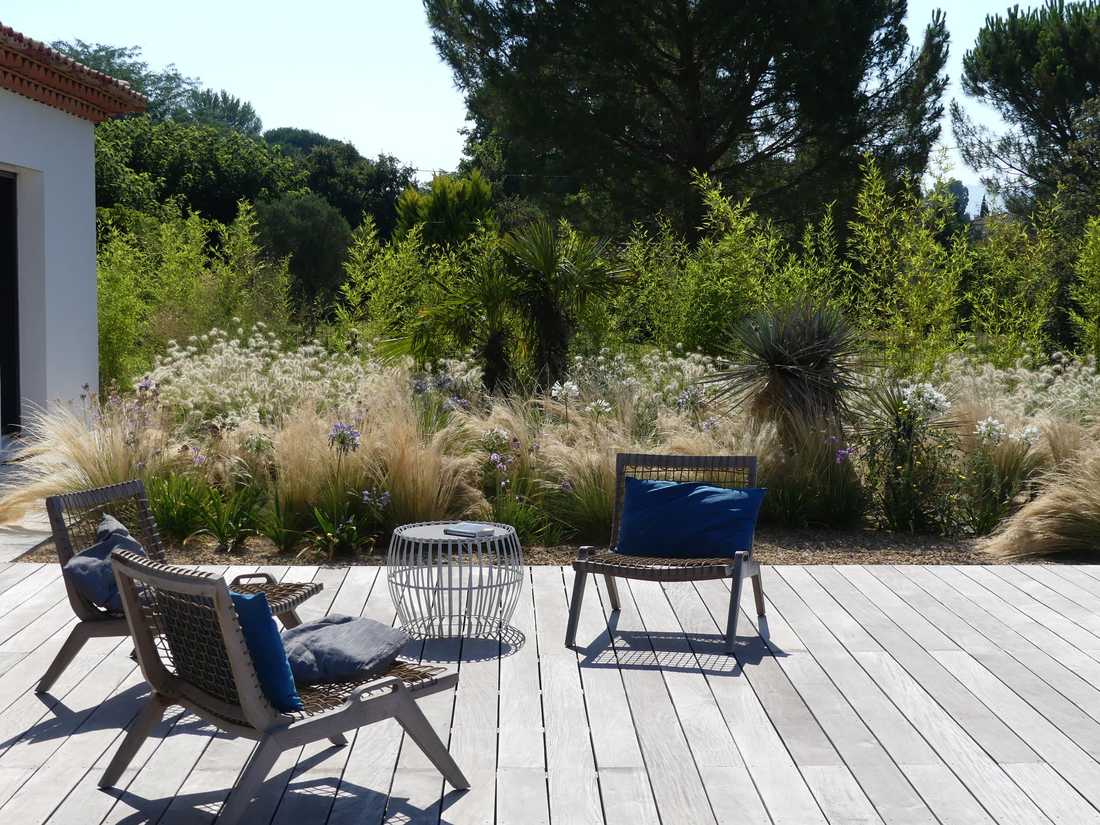
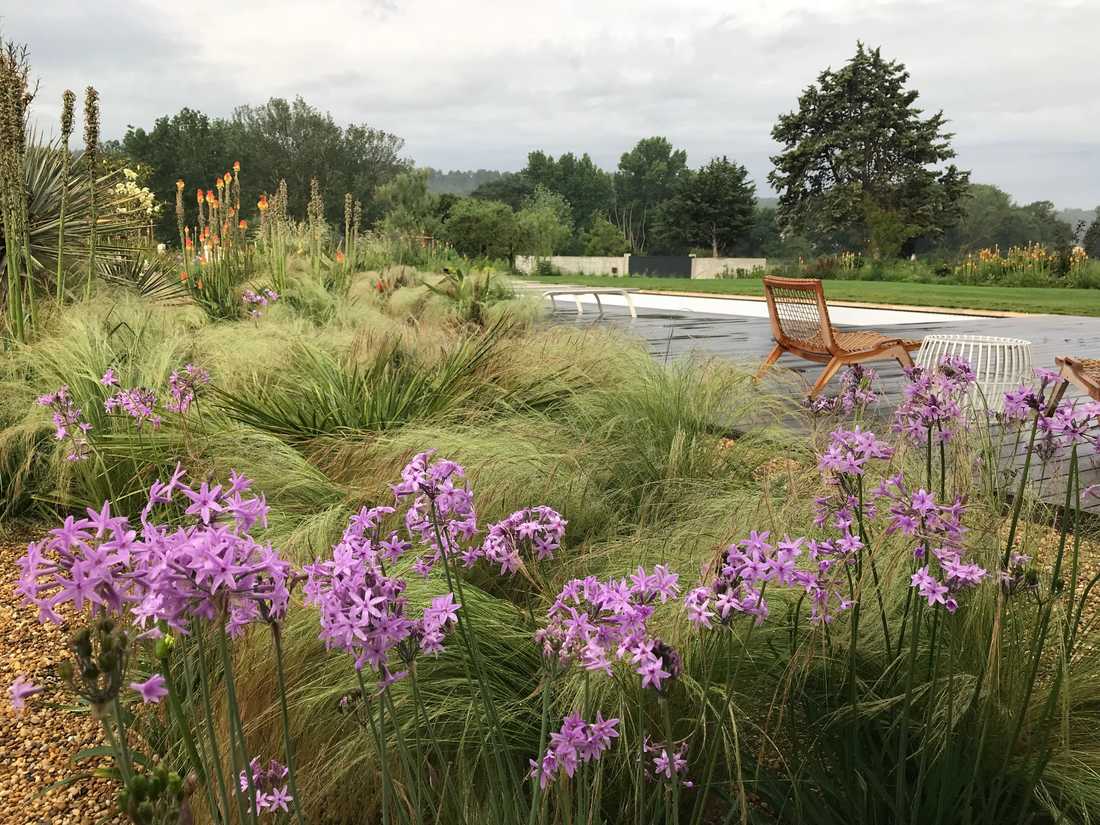
The landscape designer designed borders evoking an exotic atmosphere using plants suited to the Mediterranean climate. For these borders, he used a limited plant palette, including different types of grasses.
He also positioned each plant in a visually random and repetitive way, in order to create a naturalistic effect.
Vegetation and kitchen garden
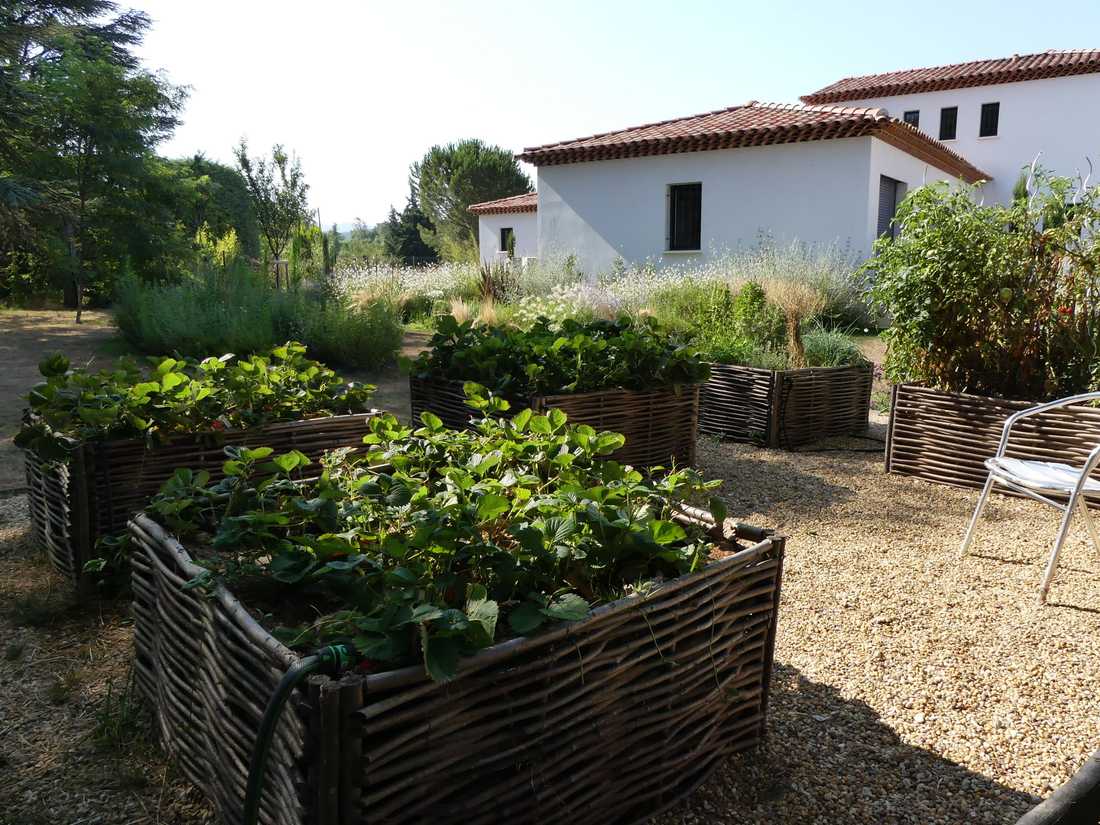
In terms of vegetation, he also favoured plants with evergreen foliage, ranging in colour from grey-blue (agave and yucca rostrata) to dark green (Chinese windmill palm and phormium), and plants offering yellow-orange blooms in spring (kniphofia) but softer colours in summer (such as agapanthus). Finally, there is a kitchen garden with woven wicker raised beds. This kitchen garden allows children to grow seasonal vegetables and fruit at their own height.
Lawn layout
Regarding the vast lawn with direct access from the house, the landscape designer proposed the following arrangement:
- on one third of the surface, roll-out turf was laid for an almost immediate effect and use;
- on the remaining two thirds, hardwearing grass seed was sown, giving a slower result (around 12 months) but representing a more economical solution.
This seeded section can then be maintained in two different ways, depending on the clients' preferences. Regular maintenance (which can be handled by a robotic lawnmower) combined with appropriate irrigation produces a dense, lush green lawn. It is also possible to forgo watering and only plan for mowing 2 to 3 times a year, for a “wildflower meadow” effect.


